


 Language
Hvis du har brug for hjælp, er du velkommen til at kontakte os

Ultimativ kabelbakkeguide: typer, fittings, understøtninger og NEC-regler
Hurtig oversigt
En professionel kabelbakke system is a rigid structural framework used to securely support, route, and protect electrical cables and conductors in commercial and industrial environments. According to the National Electrical Code (NEC) Article 392, a cable tray is legally defined as a structural support system and not a raceway. Unlike enclosed raceways, cable trays function as an open bridging infrastructure, allowing safe heat dissipation for power cables, facilitating straightforward circuit alterations, and providing exceptional mechanical safety across complex spans without requiring dedicated conduit pull boxes.
Er kabelbakker løbebaner? Den tekniske og juridiske skelnen
I elektroteknisk design er det en kritisk overholdelsesfejl at forveksle en kabelbakke med en løbebane. By regulatory definitions under the NEC and NEMA, a raceway is an enclosed channel (such as rigid metal conduit, EMT, or electrical metallic tubing) explicitly designed to enclose individual wires or wrapped cables. Wires within a raceway must be pulled through the system using pulling lubricants and specialized junction points.
Conversely, a cable tray acts as a supportive mechanical bridge. Because it is an open structure rather than an enclosed channel, you can lay conductors directly into the tray along its entire run. This open-air configuration significantly alters electrical engineering physics. Conductors operating in open air do not suffer from severe heat accumulation. Consequently, under NEC ampacity adjustment rules, cables arranged in a ventilated tray can carry higher electrical currents than identical conductors confined inside a closed raceway channel.
Hvad er typerne af kabelbakke? Strukturelle designs forklaret
Selecting the appropriate structural configuration depends entirely on the mechanical load, the type of cables deployed, and the environmental conditions of the installation site.
Stige Kabelbakker
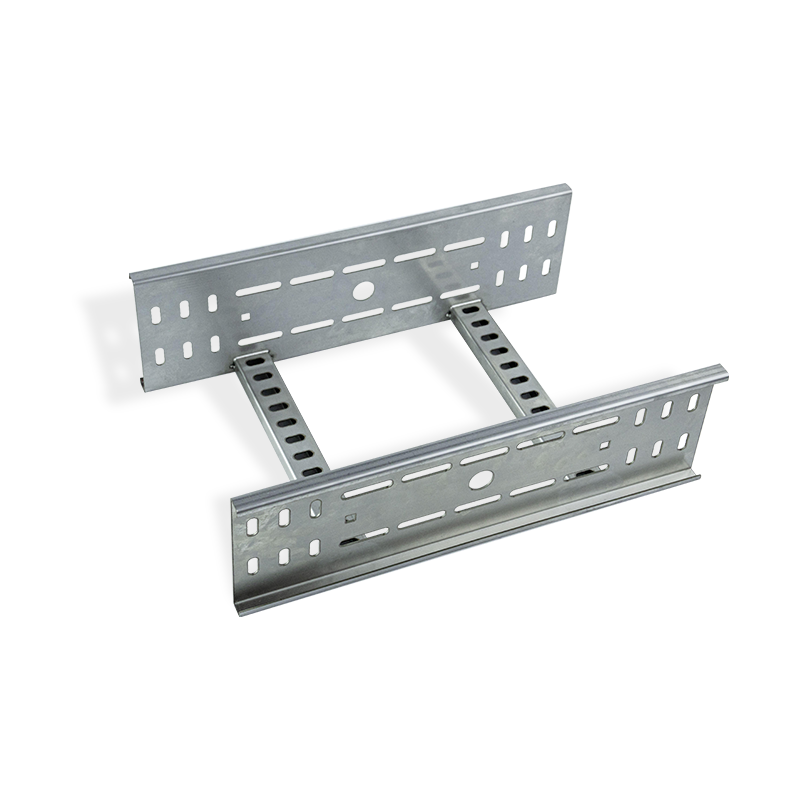
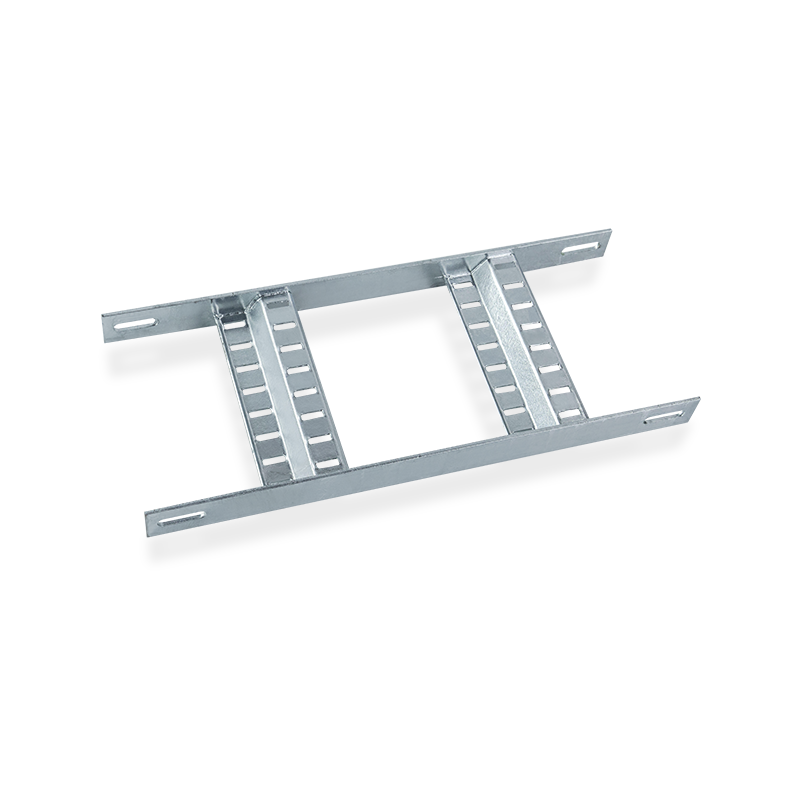
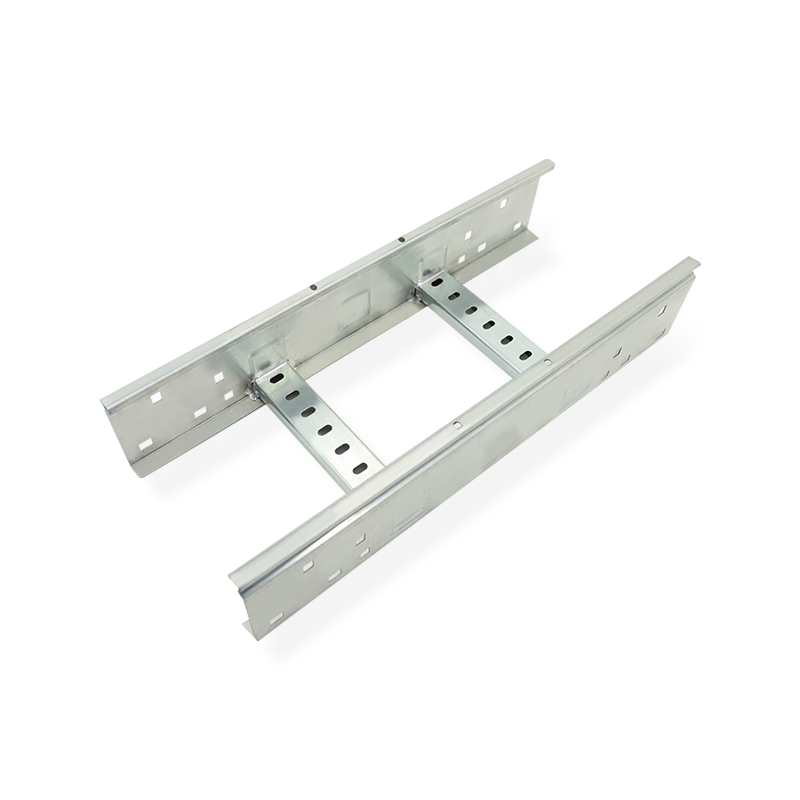
Consisting of two longitudinal side rails connected by individual transverse rungs spaced at regular intervals (typically 225mm to 300mm), ladder trays account for the vast majority of industrial installations. This design provides maximum ventilation, preventing heat buildup in high-voltage power distribution lines. The rungs serve as durable mechanical anchor points, allowing installers to secure heavy cables easily with zip ties or cleats along vertical or horizontal paths.
Kabelbakker i fast bund
This configuration features a completely non-ventilated solid metal sheet floor beneath the cable run. Solid bottom trays are specified for delicate fiber optic networks or low-voltage control circuits that require absolute electromagnetic shielding or continuous physical protection against falling debris, hot dust, or moisture drip lines.
Trug og trådnetbakker
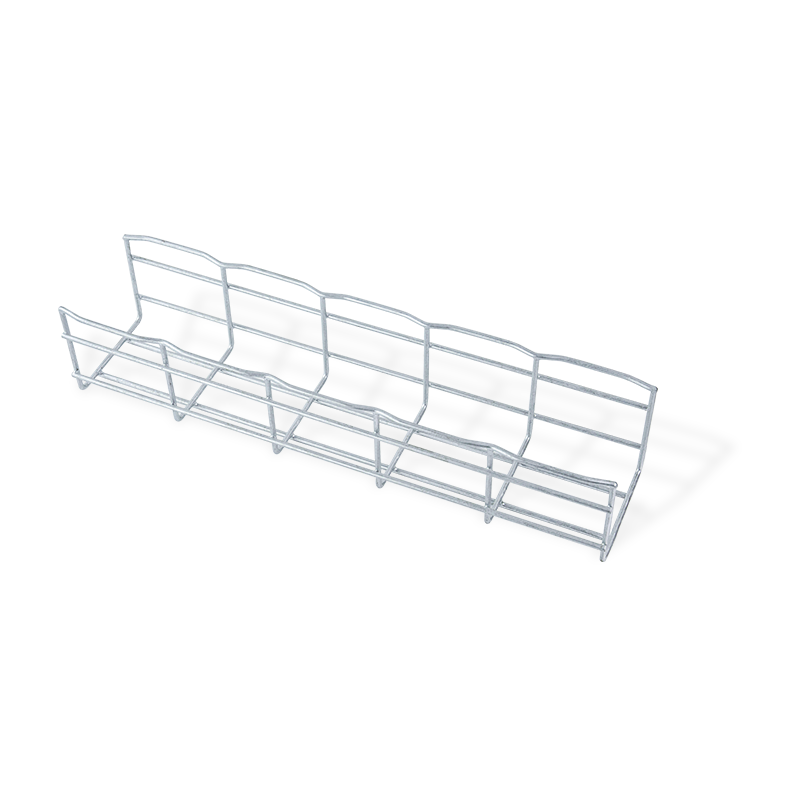
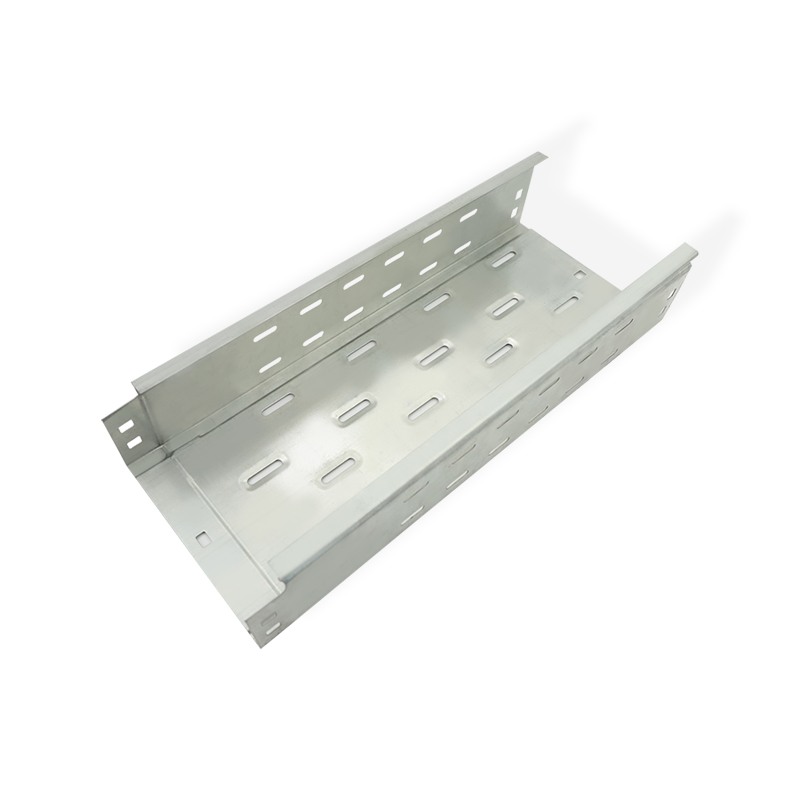
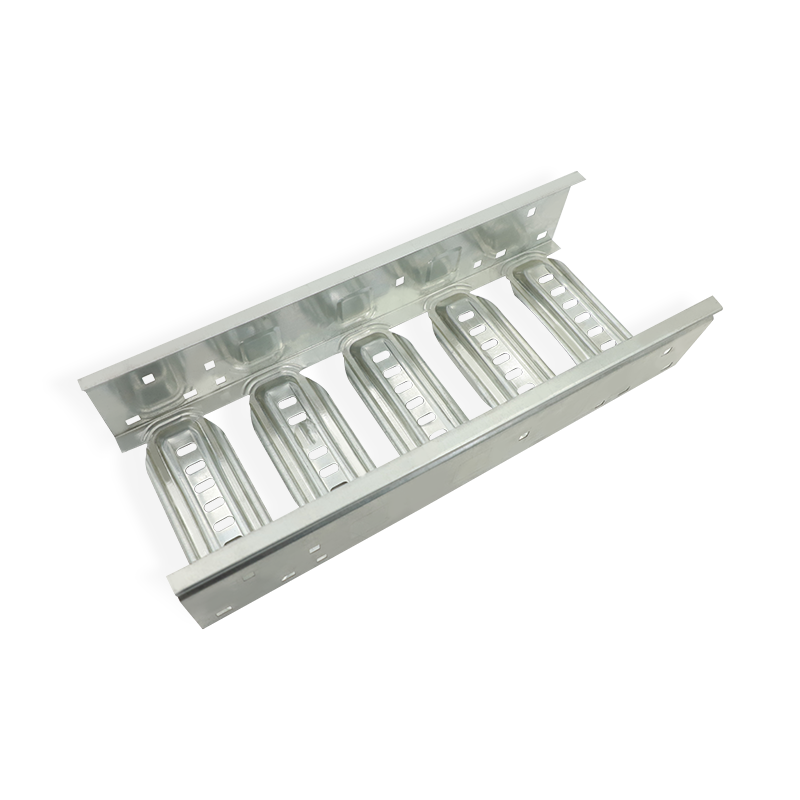
Trugsystemer har en ventileret plademetalprofil med forudstansede slidser i bunden, der balancerer pålidelig fysisk støtte med moderat ventilation. Wire mesh configurations, often called basket trays, are constructed from a welded grid of high-tensility steel wires. Basket trays are lightweight, highly flexible, and can be easily cut and bent on-site to navigate tight architectural geometries. They are universally deployed for high-density data centers, Ethernet routing, and complex instrumentation lines.
| Bakke geometri | Standard ventilationsniveau | Anbefalede applikationsfelter |
|---|---|---|
| Stigebakke | Høj ventilation (100 % luftstrøm) | Heavy industrial power, oil & gas, high-voltage lines. |
| Fast bund | Nulventilation (fuldt lukket) | Critical control wiring, heavy EMI shielding zones. |
| Trådnet kurv | Medium-Høj ventilation | Datacentre, telekommunikation, kommerciel indretning. |
| Perforeret trug | Moderat ventilation (slidsede base) | Commercial building corridors, light industrial machinery. |
Tabel 1: Teknisk applikationsmatrix, der sammenligner de kernestrukturelle klasser af bakker.
Hvad er kabelbakkebeslag? Mekaniske routing komponenter
Kabelbakkebeslag er specialiserede mekaniske komponenter, der bruges til sikkert at omdirigere, opdele, ændre højder eller afslutte en kontinuerlig bakkesamling. Because large-diameter electrical cables possess rigid minimum bending radii, fittings must be engineered with gradual geometric curves to prevent kinking or cracking the protective insulation layers of the conductors.
Standard konfigurationsbeslag inkluderer:
- Vandrette albuer: Mechanical junctions that alter the horizontal routing plane of the run by 45 degrees or 90 degrees.
- T-shirts og kors: Opdelte skæringspunkter, der tillader en enkelt primær distributionsvej at forgrene sig i vinkelrette retninger på tværs af en fabriksetage eller et bygningsnet.
- Lodrette bøjninger: Specialiserede indvendige eller udvendige lodrette beslag, der bruges til jævnt at flytte en vandret bakke over eller under strukturelle bjælker, kanalsystemer eller arkitektoniske barrierer.
- Reducere: Splejsningsovergange, der jævnt justerer den samlede bredde af bakkesystemet ned, når en betydelig del af kablerne er faldet af til fødemaskineri.
Hvad er kabelbakkestøtter? Strukturelle forankringsmetoder
Et bakkesystem er kun så pålideligt som dets forankringsinfrastruktur. Supports are the structural hardware assemblies that transfer the combined dead weight of the metal trays and heavy copper cabling to the structural framework of the facility. Disse understøtninger skal overholde strenge afbøjningsmålinger specificeret af NEMA VE-2.
Trapeze
Trapeze Support konfiguration
Standardmuligheden for loftsinstallationer. Dette system anvender en vandret strukturel metalstiverkanal ophængt af to gevindstålstænger fastgjort til den overliggende bygningskonstruktion. Bakken hviler perfekt fladt på tværs af stiveren og er låst ned med hold-down klemmer. Den giver fremragende stabilitet og understøtter let montering af flere lag på en enkelt stang.
Cantilever
Cantilever vægbeslag støtte
Når overliggende loftsadgang er blokeret af ventilationskanaler eller strukturelle begrænsninger, er udkragningsbeslag specificeret. Disse tunge stålbeslag er boltet direkte ind i strukturelle betonvægge eller stålsøjler, der rager udad vandret. Bakken er fastgjort direkte til den øverste flange af beslaget, hvilket skaber en ren sidevej langs en forsyningskorridor.
Center
Center-Hung Hanger Systems
Dette enkeltpunktssystem anvender en enkelt central gevindstang, der falder ned fra loftsloftpladen, og forbindes til et specialiseret indvendigt beslag under bakkeprofilen. Dette arrangement efterlader begge ydre kanter af bakken åbne og uhindret af sidestænger, hvilket gør det muligt for installatører at lægge nye elektriske kredsløb på plads uden at skulle flette kabler gennem bærende strukturelle stænger.
Teknisk installationsregel: Understøttelsesintervaller er strengt bestemt af NEMA-belastningsklassen. Et typisk kommercielt system kræver solide støtteforankringsplaceringer hver 1,5 meter til 3,0 meter (5 til 10 fod). Heavy industrial long-span installations can extend structural gaps up to 6.0 meters (20 feet) by employing heavy-gauge deep aluminum side-rail configurations.
Almindelige professionelle spørgsmål vedrørende kabelbakker
Kan lavspændingsdataledninger placeres i samme bakke som højspændingsforsyningsledninger?
I henhold til NEC 392.20 må lavspænding telekommunikationssignalering eller optiske fiberkabler ikke blandes vilkårligt med højspændings elektriske strømledere. Højspændingsstrøm genererer elektromagnetiske felter, der introducerer alvorlig datakorruption og krydstalestøj i uafskærmede netværksledninger. If routing paths must be shared, you must insert a solid, grounded metal divider barrier inside the tray to separate the wiring bays, or isolate the distinct voltages completely into a multi-tier stacking array.
Hvorfor kræves elektrisk binding og jording til en ikke-strømførende bakke?
Selvom en metalbakke udelukkende er designet som en passiv fysisk støttestruktur, kan enhver isolationsfejl eller strukturelt kabelnedbrud øjeblikkeligt give energi til hele metalbanen med dødelige spændinger. For at forhindre elektrisk stød og sikre, at afbrydere udløses hurtigt under en kortslutning, skal hele bakkenetværket bindes sammen kontinuerligt på tværs af alle samlinger ved hjælp af kobberbindingsjumpere og bindes direkte ind i anlæggets primære strukturelle jordfelt.
Hvad er den tilladte grænse for kabelfyldningsforhold for en standardbakkekonfiguration?
Unlike a conduit which can sometimes accept up to a 40 percent area fill density, ventilated cable tray fill parameters are much more restrictive to avoid insulation heat fatigue. For heavy single-conductor power cables, configurations are typically restricted to a strict single-layer arrangement with distinct separation gaps. Styre- eller signalkredsløbsledninger placeret i rendesektioner er generelt begrænset til en maksimal fyldningsdybdegrænse på 50 procent af det samlede tilgængelige tværsnitsvolumen af bakkestrukturen.

Youming Group er en produktionsgruppe, der hovedsageligt beskæftiger sig med forskning og udvikling af ny højstyrke kabelbakke
Produkt
- Trådtype kabelbakke serie
- Udstanset type kabelbakke serie
- Trog Type Kabelbakke Series
- Kabelstativ Ladder Series
- Stige Type Kabelbakke Series
- Marinekabelstigebakke
- Strut Channel Kabelbakke Series
- Tilbehør
- Fiberkabelbakke/Optisk kabelbakke
- Fotovoltaiske stents
- Kabelbakke i rustfrit stål
- Kabelbakkesystem i aluminiumslegering
Kontaktoplysninger
-
No.36, Taidong Industrial Zone Shiyan Town, Dongtai City, Jiangsu-provinsen
